Behind her, not too far from her left ear: "Geeez, Chrissy; you realize that taking showers is one of the few things that Fernbrook still allows us to do, right?"
Chrissy squeezed the ends of the sleeves she had balled into her palms. "The greatest fallacy that humanity has ever swallowed is that we're beautiful."
August 22, 2013
August 21, 2013
-
I wanted to start actually writing things that were longer than simple short stories (and my stories generally tend to be short for short stories). I'm already noticing how much I hate it. It's far easier to make tight writing in smaller spaces (though hardly surprising). While I've been posting parts of this from time to time, I've been putting a lot of my notes and unfinished bits here. With Xanga coming to a close, there isn't much point in keeping this private. Forgive the unfinished mess this post entails.
Trigger Warnings: Self-Harm, Eating Disorders, Mental Illnesses
"I am starting to get bad again.
"I threw a chair at the cook a fortnight ago because the beans were burnt for dinner; it would seem that my last complaint went unheeded. I spent all of last weekend in bed because I couldn’t physically bring myself to put my feet on the ground. And I shouted at the entire room during group today because I felt claustrophobic. I can’t read anymore; my concentration’s shot and it’s making me feel stupid. The last drug you gave me isn’t working fast enough so I stopped taking it. And I’m here, breathing, in your office a full three weeks later so I think that confirms its unnecessity."
Chrissy stared, expectingly.
There a soft, though audible, sigh before the sounds of a person, purposefully, leaning forward. "I would have to strongly disagree."
Scoffing, Chrissy turned on her forefeet and leaned both palms against the edge of a shelf in the bookcase so that it creaked under strain. Her hands tightened as the words came wafting back towards her: "I’m considering you for the Luna Institute. We can’t seem to do much for you her and, frankly, you don’t seem to have much intention to be co-operative."
"Great," Chrissy seethed, her unrestrained smile making it somewhat hard to pronounce her next words. "I’m thoroughly certain they’ll be able to do something you have yet to’ve accomplished."Incidentally, I am sending you under separate cover a pamphlet published in Prague by my friend Professor Chateau, which brilliantly refutes your Dr. Halp's theory of birth being an act of suicide by the infant.
-Timofey Pavlovich Pnin"C'mon, break'em up; break'em up already!"
Amy gave 'Rome the slight smile she gave every person for whom she had every remote intention of pissing off. "Sorry, I couldn't understand that; could you talk any faster?" she asked as she leisurely started to deal the deck of cards.
Chrissy's card halted. The sounds of years-old sticky substance met their ears as she peeled the card off of the spot it had ceased to slid across the table. "Classy, as always, Fernbrook," she muttered.
"Any word on how the war's going?" James murmured as he fidgeted with his hand of cards, looking through them unbreakingly.
Amy brushed a few locks of her hair behind an ear, the uniformly black strands equally reflecting the sunlight streaming through the glass roof. "The better question, Jamie Boy, is if anyone here cares." She smirked slightly as she flicked a card in his direction.
"Or if anyone should care," Chrissy muttered, tapping her cards against the table to get a straight stack.
Amy started to set the remainder of the deck in the middle but was stopped by a frustrated whine by 'Rome. She smirked again, placing one corner of the deck on the table as she held it up. "Yes, Jerome?"
"For fuck's sake!" he hissed, slightly grinning in spite of his irritation.
"Oh, let it go, would you?" Chrissy asked, annoyed as she ordered her cards. "I'd like that we actually start a game remotely in a quick fashion."
Amy rolled her eyes as she deftly raised the deck up before tapping the longer side against the table twice, a shorter side against the table one time, and then twice more against a longer side with an almost chopping motion. "Satisfied?" she muttered, still smirking.
'Rome let out an audible sigh as he slumped back into his chair. "Fuck, that shit's good."
Amy rolled her eyes once more towards her right side, placing down three cards. "I'll tell you what's good. Little Davie at the North Ward."
'Rome glanced down at his hand, shrugged, and tapped it against the table five times before placing his entire hand down and taking his replacements from the deck. "You fucking around with them Polars again?"
Amy watched Chrissy place down two cards as she mused, "He was so tentative, too, poor boy. I kept expecting for him to suddenly take charge and go into hair-pulling half of the way through." Both Amy and 'Rome burst out laughing, 'Rome slamming his hand against the table; Chrissy half grinned as she chuckled, rearranging her hand; James just watched.
"Have I ever gotten around to mentioning that you are ever so amiable?" 'Rome chocked out as he whipped his eyes.
"Psh, did you just meet me, 'Rome dear?" Amy glanced at James while rearranging her cards as she waited, starting to tap her foot. "Besides, I know all of you – ain't no one trying to find Jesus here."
Chrissy decided she was going to ignore the fact, again, that she could see James's cards; she glanced once more down at her own hand and then laid it, face-down, on the table. "Oh, I didn't tell you guys? I found Jesus."
Amy immediately swung around to her left, causing the chair to jerk that way against the floor as well. "Did you now? Darling, why have you kept us waiting?"
Chrissy chuckled. "He's actually a neighbor. They've got him down in the Southwest Ward. It's said that, when the drugs wear off – and he regains consciousness –, it'll be the Second Coming."
"Oh, honey, I got Davie to do more than just two," Amy giggled, leaning back her chair – a standard, metal chair that they issued to all of Fernbrook – so that it rested solely on its two back legs. "You'll fall again," shouted an orderly from the kitchen as he gave someone a helping of the gray sludge that was lunch for that day. "Not as quick as you did after I smashed your balls last week!" Amy cheerfully shouted in return, not bothering to look back.
James set down four of his cards, the reflective blue of the back of one catching the sun streaming in above which made it all the more jarring beside the solid red backing of the second and third cards; one of the cards had a good chunk of its corner ripped off; the forth card's back layer had been stripped off, leaving only the white. Both Amy and 'Rome slammed down their hands immediately: a full house and a pair of fives, respectively.
James frowned before laying down a set of Queens. He glanced to his right at Chrissy. As slowly as she could before either 'Rome or Amy made an outburst, Chrissy laid down a straight flush.
Amy jolted forward in her chair and slammed a fist into the table, causing the top card of the deck to bounce and the purple logo, against a black background, to reflect in the sunlight; nobody in the cafeteria stopped what they were doing. "God, Cutters!"
Chrissy resisted the urge to tug her sleeves down despite the fact that they were already past her wrists as it was. She smiled the most syrupy smile she could muster and insisted, "The proper term, Amy, is self-injury. Or has the dark from being consistently sentenced to solitary confinement not yet taught you to respect each person's personal issues?"
Chrissy had barely finished her sentence before Amy scoffed, waving her hand dismissively and proceeding in the fashion of her psychiatrist. "I simply call abnormality as I see it. Once you recognize that, you can start to make real progress. And join the warring world out there. Don't you want that?"
It was 'Rome's turn to balk. "Normal?" he chuckled in the fast gear most of his speech seemed to be jammed in. "There are one thousand seven hundred forty-two people with some stripe of depression in here with three hundred thirteen of that being Polars; three thousand five hundred ten Eds with two thousand one hundred four Anis and one thousand four hundred six with bulimia; three hundred forty-five with insomnia, poor fuckin' devils; three thousand two hundred ninety-five Cutters," slowing none as Chrissy gave a swift kick to his shin, "two thousand nine hundred fifty-six anxious motherfuckers with a spectrum of nine hundred thirty-six phobias; zero cognitive or developmental disorders," he noted with a smirk to his surrounding table members, "sixty five with dissociative disorders chilling in their club down at the South Ward – and just some plain rude whippersnappers I might add, seeing that I find it hard enough to remember one name and then they make three or four more for me –; 12 of the sweetest pyros you'll ever meet before watching your house and life investments go (but that's cool, seeing that we no longer have either anymore); and some other score of shit that I couldn't bother to remember."
"Someone been breaking into the record room again?" Amy cooed.
'Rome laughed and rolled his eyes. "Don't fuckin' patronize me: you can't build this large-ass building, lodge a bunch of Disorders together, and then try to tell us that it's our large number, in comparison to everyone else, that's abnormal. Fantasies of elongating a pretty neck are damn common place for us. That's my reality. The fact that yours is different don't change that."
"Aww, look't 'Rome getting all indignant," Amy continued to coo. "Can't control his profanity and has weird rituals he must do and he thinks he's normal." 'Rome rolled his eyes and laughed as he tapped his hand of cards against the table, visibly feeling relief mid-process.
"I've missed this," James suddenly said, his eyes going wide immediately as one who reached for a pot of beans and spills the whole canister in their uncertainty of whether they even want it open.
Simultaneously smirking, Amy groaned. "And I was getting used to not hearing your voice, James."It's amazing what lingers from the Outside. When you enter the cafeteria, take your first glance to where the SIs are sitting; they're always pulling at their sleeves, even if the sleeve is already low enough.
It's amazing what lingers still from the Outside. When you enter to eat, cast first glance to the place that the SIs will sit; they are always still pulling their sleeves, disregarding irrelevant length."Get out! Get out get out get out!"
"Fuck fuck fuck fuck fuck…"
"Tell me, 'Rome – is constant swearing truly a disorder of yours or did you just make it up to have an excuse to cuss like a sailor?" Chrissy asked as he came bolting out the room, laughing like a 5-year-old on Christmas day.
'Rome spun around, nearly losing balance, just to grab Chrissy's hand and yank her up from her chair. "I told you it was a bad idea!" he sped out as they rushed down the halls away from Amy's room.
"Ohh, I know," Chrissy sighed, jumping a stray chair as they barreled along, "but you, Anxie, just can't resist someone insisting you won't do something."
Repetition ensured that they both would slam their backs against the wall to catch their breath as they whipped around another corner. Wheezing, 'Rome peeked back around. "I don't think she's following; maybe we're getting her used to it."
Already breathing regularly, Chrissy scoffed. "Don't count Amy out yet. This is the same crazy that not even the orderlies will boss around unless they have to."
"You don't have to remind me of the sole reason we decided to hang out with her," 'Rome raggedly chortled, slumping to the floor. "I swear, I wanted to craft a makeshift cup for a full week after she Soccer-kicked the fuck out' that one orderly."
Chrissy raised her eyebrows as she wiped her watering eyes, squatting to join 'Rome. "You think that would've stopped her?"
"One never knows if one can lift a shower-room control panel until one tries," 'Rome scolded before both started laughing.
Loudspeaker feedback creaked its way into the hall as the voice of the warden drowned out Chrissy and 'Rome's howling with the automated announcement for lights out. Smoldering on its own in the already poorly lit hallway, sparks were spat to passerby as the warden slowly demanded that each person heed lights out under pain of solitary confinement; the rust caked the metal bars around the loudspeaker, giving away the age of the facility and ensuring that even the maintenance workers would be given a challenge.
A particularly malign spark, which caused a mixture of the warden's pitch to lower and a wide variety of feedback, made an Anxie that was scuttling along jump; 'Rome laughed.-spark flies from one of the loudspeakers; in cage
-scares an Anxie
-Anxie notices 'Rome and Chrissy and makes some mean remark about Amy
-'Rome, with barely a smile, informs that zir parents never really loved zem
-"On the Outside, those would've been fighting words. Or maybe they're only fighting words on the Inside. Either way, fighting words would have initiated a fight on the Outside.
The [girl/boy] trembled in a failed attempt to fight back tears. 'Rome slowly turned and left, not saying a word until he and Chrissy went to separate to their respective rooms.
-"You know…I never was very good at introductions."Chrissy, keep your eyes open. Getting only three hours of sleep is not an excuse. It doesn't matter that it keeps you sane and removes boredom, Chrissy. It doesn't matter that it races your pulse and makes concentration a challenge. There's a cut in the wallpaper in the corner over there. That may be new. Was that there last week? Last week is sort of blur. Wait; stay focused, Chrissy. Though, on what? They're moving someone into room 220 today. It'd probably be nice to stop by and say hello. He'll probably be terrified, being new; that's always amusing. Not that it's appropriate to provoke to amuse, Chrissy. Ought to know better. Already do know better. It's amusing; it shouldn't be provoked for amusement: it's really that simple. "Chrissy!"
Chrissy casted her eyes down from the ceiling. There was a moment of silence as both sets of eyes peered into the other. "Have you heard a word I've said? I asked you a question."
Legs are crossed; this is usually meant to signify defiance. "Listening is a sign of importance."
No, that cut was definitely not there last week.**/Future note: fall into verse right before a "Chrissy" is used; then lapse back to plain speech.
These in-fer- / nal e-mo- / tions screw ev'- / ry-thing touched / by them up.
You would think / a be-ne- / vo-lent God / would po-ssess / at least one
Means of liv- / ing that did- / n't in-clude / what is vom- / it-ing feels.
Or per-haps, / in His in- / fi-nite wis- / dom, it's found / to be wise
To re-lin- / quish en-tire- / ly the no- / tion of a- / ble con-trol?
Is it po- / ssi-ble, may- / be, I might / in-tro-duce / my-self, once,
Un-en-cum- / bered by prac- / tic-ing knots / with my tongue / like a sport?
I would ra- / ther ar-tic- / u-late au- / di-bly, thank / you – e-nough!
These in-ces- / sant in-ter- / nal so-lil- / o-quies come / to their end:
I will not / spend the whole / of my life / mere-ly prat- / tl-ing on
In my head / in con-fine- / ment by sim- / ple pe-ti- / tions that form
In me cease- / less un-rest / from pro-longed / in-dis-cre- / tions in which
It is clear / that I can't / be pro-voked / to the point / where I don't
Find of-fense / at ex-pect- / ing to shed / all my thoughts: / "'Fraid I won't."These infernal emotions screw ev'rything touched by them up.
You would think a benevolent God would possess at least one
Means of living that didn't include what is vomiting feels.
Or perhaps, in His infinite wisdom, it's found to be wise
To relinquish entirely the notion of able control?
Is it possible, maybe, I might introduce myself, once,
Unencumbered by practicing knots with my tongue like a sport?
I would rather articulate audibly, thank you – enough!
These incessant internal soliloquies come to their end:
I will not spend the whole of my life merely prattling on
In my head in confinement by simple petitions that form
In me ceaseless unrest from prolonged indiscretions in which
It is clear that I can't be provoked to the point where I don't
Find offense at expecting to shed all my thoughts: "'Fraid I won't."These infernal emotions screw everything touched by them up. You would think a benevolent God would possess at least one means of living that didn't include what is vomiting feels. Or perhaps, in His infinite wisdom, it's found to be wise to relinquish entirely the notion of able control? Is it possible, maybe, I might introduce myself, once, unencumbered by practicing knots with my tongue like a sport? I would rather articulate audibly, thank you –
Enough! These incessant internal soliloquies come to their end: I will not spend the whole of my life merely prattling on in my head in confinement by simple petitions that form in me ceaseless unrest from prolonged indiscretions in which it is clear that I can't be provoked to the point where I don't find offense at expecting to shed all my thoughts
"Really, Chrissy, this time can be better spent than in silence." Chrissy doubted that there was any realization to it but the pen was beginning to tap against the notepad in time with the clock on the wall. A sigh. "I can't help you if you have no interest in helping me. You can leave unless you're going to actually add anything to this discussion." There was a second's pause before Chrissy got up from the chair, muttering,
"'Fraid I won't."Rob's team had the ball. It's passed to another team member. He dribbled it up the field a little bit. He looked tired. The game had been going on for a while now. And the ball had been stolen. They're nimbus clouds. Not for long. Rob had the ball. They'd been playing all afternoon. Channel 7 had said that mine work on the moon was being shut down. And I probably shouldn't have chosen white pants for this day. Those clouds looked dark. They'd called a timeout. Something about avoiding the core collapsing. It's around about halftime that Rob offs his shirt. It's drizzling. They were attempting a new colony on Mars again. An improper attempt at a hanging can mean that you'll need to then wait a full minute and, well, I could never just master my patience to will. Shot on goal. They were playing Soccer. It's pouring now. The mugginess is gone. It's finally cool. There is barely a day where I don't have the thought "I am thinking I'll burn down the world…"
A pen clicked. "You mentioned once that your parents seemed to direct most of their attention to your younger sister. How did that make you feel?"
Chrissy cocked one of her eyebrows, trading glances with the potted plant on the window sill. "Indifferent."
Some papers rustled. "Really? That seems to be a frequent answer of yours."
If you slump low enough, the nape of your neck becomes perfectly level with the very top of the back of the couch chair. "My first assumption in life is that I'm generally ignored. I have yet to've seen this as a disadvantage."
There was some scribbling before the setting down of a pen.
"You know, most people lie through their teeth just for an attempt to get out of here."
"I think people like to do it; I think they get pleasure from it."
Chrissy's right arm jumped in its place on the arm rest and her left eye twitched for a second in outrage towards the window sill. She had blinked.I've spent most of my life hiding below the surface of everything just to keep sanity and being while my mind yearned for so much more. I always imagined I'd create such pretty things – of wonder, adventure, and fascination – while the actuality of my life continues to consist of the trite. It's how I came, brooding, into the world and, I imagine, it's how I shall leave it.
Chrissy snorted into her hand as 'Rome pranced around with his shirt off; no one was particularly certain how his braying and shirtlessness were an image of the warden but, judging from the rolling laughter and sizable crowd gathered in the lunchroom (outside of lunchtime), no one particularly minded. James sat towards the back, near one of the entrances, smiling gently. Amy was playing with a deck of cards, mostly shuffling them repeatedly; she glanced up every so often, smirking to herself.
"And what – is going on, may…I…ask?" Charlie called out, slowly goose-stepping his way through the myriad of tables and chairs and people draped across them. 'Rome immediately jumped to attention at the table he was on, facing Charlie.
"Just an enactment of display, sir! A crowded spewage of obscene caricatures, sir! A stage, sir, in my growing out of immaturity, sir! A, sir, part of, sir, my prescription, sir! Sir! Sir!"
Charlie gave a crooked smile as he swaggered around the table that held 'Rome up, his eye never breaking contact with 'Rome's. He pulled a chair out from the table and, with an exaggerated flourish, sat down. Amy continued to smirk, shaking her head as she shuffled her cards once more. "At ease, soldier."
Charlie stretched his arms out as he yawned; he tried to lean back in the chair but the unyielding metal frame caused him to just slump down. With hyperbolic irritation, he hoisted his legs onto the table as 'Rome jumped off. "And what are you all doing here?"
"To watch the fool, sir!" Chrissy immediately piped up, the sides of her mouth turning upward for the first time in the past week.
Charlie's eyes jumped from the fashionable 'Rome to Chrissy. "Aren't you supposed to be depressed? Shouldn't you be crying in a corner somewhere right now?" Charlie scoffed, taking his feet down.
Amy put the deck down immediately, thumbing through the entire deck as she did so until she had everyone's attention as the sound receded. "Is depression so antiquated a notion," she asked as she stood up, before 'Rome could formulate his already confused facial expressions towards Charlie into words, and proceeded, taking her deck with her, towards 'Rome's table, "that you are unfamiliar with it, Charles?"
Charlie casted Amy a bemused look. "You want something?"
Unceremoniously, Amy casted her deck towards Charlie's face. "The Hell –" Charlie sputtered as he tilted backwards, his arms then spasming as he attempted to balance his chair. Before he had a moment to right himself, Amy grabbed a handful of his shirt and pulled him inwards. "Break this table – now." She thrusted her share of the shirt back at him as she released him.
"Now!" Amy bellowed, her fist ripping through Charlie's composure as it rattled the table. He gave Amy a flustered look that seemed to misunderstand the request but Amy was already walking away, addressing the surrounding patients in the lunchroom.
"What's the matter‽ Are you just lazy? You haven't even bothered to start!" Amy's piercing calls rang out. Charlie managed to stutter, his eyes scouring his palms, before Amy whipped around and smashed her fist, again, on his egression.
"I said…to break this table."
In complete bewilderment at this task suddenly thrust upon him, Charlie's eyes darted across the room for tools – any – that he might use, his brain desperately trying to conceive of them in ways he hadn't before to tear apart what was in front of him.
Causing him to jump in his chair, Charlie's surroundings infiltrated his thoughts once more as Amy snatched a nearby tray and slammed it against the side of the table, splitting it cleanly in two. Chucking the piece still in her hands onto the floor, Amy leaned across the table so that her leer was merely centimeters from Charlie's face. "There you go, a small example for you. All you gotta do is do that to the table. Think you can do that for me?"
Amy got up from the table and started to pace in front of it, completely upright. She cleared her throat. "You probably want some hints." Charlie gave the pacing Amy nothing but a steely look as his right hand grasped the table in an attempt to stop shaking. "You should probably try smiling," she observed. "It would probably reassure me that you want to be cooperative and boost my ego that you're smiling around me." Charlie sat there, breathing steadily. "You could probably use my lessening up to try to regain composure." Hesitating, Charlie's lips twitched in an attempt to rise, his muscles trying to muster a grimace into a grin.
With a sharp turn, Amy pounded the table once more. "How haven't you done this yet? I mean, you haven't even started! I already gave you an example. All you have to do is do what I did. Get it? Do it again!"
His eyes burrowing into the ground, Charlie refused to react to Amy's repeated pounding, each downward execution of her wrist and shout perforating the blanket of quiet that had enveloped the room.
"Do it again! Do you get that‽
"Do it again!
"Do it again!
"Do it again!
"Do it again!
"Do it again!
"Do it again!
"Do it again!"
The nightly recording for lights out creaked out over the loudspeakers. Sighing, Amy stood up as Charlie still refused to make eye contact. "Task still isn't done.
"Go get some sleep; we'll do this again, same time, tomorrow."Ze started to pace the moment ze stood up.
She couldn't tell – her own apprehension kept her preoccupied – but zir nervous tick had kicked in. Ze limped flagrantly, feeling zemself get warmer as ze jostled zir insecurities with zir task.Do you even get it? What it meant to cut? It meant that even those few uncontrollable emotions were silenced, that my body – for at least one moment – stopped screaming at this unsufferable world.
"And I get it!" Chrissy screamed, swaggering about in a staggering rage. "I get why Amy fights everybody, as if everyone owes stabbing her in the back."You're drunk," Chrissy noted as a shadow passed over her.
"I found some whiskey," Amy slurred, offering only a penetrating smile that wallowed in its own complacency.
"Which kind?" 'Rome asked, inching up from the cafeteria chair he had been reclining in.
Amy staggered over to a table, her arm jutting outward to grasp hold of it with such force that the table vibrated against the friction of the concrete floor. All three of them watched her back as she stood there, hunched over as the table continued to shake in her grasp. With a rasping intake of breath, she brought herself upright.
"I didn't very much care," she drawled.
Giving herself a soft push, Amy fell into a nearby chair, sliding a few inches across the floor. "I used to drink all the time, you know." With a crooked leer, Amy gave a nod to her company before raising the bottle for a drink.
'Rome was standing; Chrissy was sitting entirely upright; James hadn't moved. Amy's hair had fallen over her face, casting shadows that seared the glow the full moon gave everything as it flooded the room from the ceiling; every bit of electricity in Fernbrook had been killed during the panic and evacuation.
"Why did you stop?" 'Rome asked.
The bottle clinked as Amy slid it onto the table. "Alcohol," she mused, "stops the mind from thinking. It stops the body from yearning. It deadens the senses and dilutes reality." Amy's smile faltered before becoming slack. Her gaze bore through 'Rome, through the wall and the cells behind him, and past the very atmosphere outside into a time which no longer existed and feelings which no longer knew their nature.
"We're taught to yearn, you know that?"
It was barely a whisper but there were no noises to fight it. No one moved. The whiskey sloshed within as Amy clasped her hand to the bottle's neck before bringing it back to her lips, her eyes still staring off into dead space. Teeth grinding as she groaned, her voice crawled out:
"Before they came to get me – I was six, you know that? There…was a time when I was six. And my teacher – Mr. Johnson – once commented that I didn't draw within the lines one time. It was a random assignment to keep us busy – even I knew that; 'didn't see the point. And, for whatever reason, I spent the rest of that year doing whatever he said we should do exactly as he expected them to be done. Nothing…was more important than that he should consider me a good student. I was to be a model and everyone, from my parent to my teachers, were to be able to safely look down on me knowing that I did as was expected. I didn't make waves. I didn't make trouble."
Amy's eyes shot to 'Rome who was just before the table. Before 'Rome could utter a single suggestion, Amy gingerly placed her hand on his arm. "You are possibly the only person I know I would lay my life down for, 'Rome, but I promise you I will lay you down if you dare to touch this bottle."
Both hands were pulled in as Amy doubled over, her back heaving as the sound of her hacking gave forth to wheezy laughter. "But when I stopped eating," she guffawed into her hands, "well, it was a little hard to be so perfect." 'Rome stood stonily where he had stepped back to with the exception of his hands which were fidgeting uncontrollably; Chrissy was standing where she had been sitting; James still hadn't moved.
Amy's chuckling devolved into a listless grin. "You want to be perfect and perfect doesn't starve itself. Perfect doesn't hide food; perfect doesn't count calories; and perfect doesn't ever feel it has to!" Her voice pitched at the ending, riding into a snarl as she pounded the table at each pronouncement.
As if waiting for the echoing to abate, Amy just sat there.
"Oh…" she murmured slowly, "but I had to.
"Because perfect wasn't me and I had to be…perfect." Never breaking eye contact with the wall, she downed another gulp from the bottle. Whiskey had run down her chin and into her lap before she bothered to wipe it away with the back of her arm.
"Danielle thought I was perfect." Amy's eyes darted up to see none meeting them. "She thought I was positively brilliant." 'Rome's hands had stopped. "She used to hold me and tell me how she knew – the second I couldn't open my mouth while others were present, the way I would try to skip showering just so I'd have more time to work on my drawing, the way I could escape into my own world in spite of everything else that was going on around me, the way I'd push a few strands of hair behind my left ear whenever I was nervous, the way I wanted to learn everything in spite of being taken out of school so young, the way I rarely made eye contact – that she was going to be mine."
Amy scoffed, shaking her head, as she peered down the opening of the bottle. "She used to say that she didn't believe in suicide notes because the entirety of our life was a death note; what were you going to say when you left?" Amy laughed as she took another swig, chuckling as she tried to swallow her intake.
The bottle clinked against the table once more as Amy slid it onto the table carelessly. "You know – everyone talks so highly of her now. Even if they're indifferent, they know her name," Amy balked, hunching forward in her chair as she eyed the three in front of her. "They talk about how kind she was, how her charity knew no end. They talk about her patience, her tranquility, her selfless nature. Want to know how she died?"
It wasn't really a question.
Amy contorted into a twisted grin that etched sorrow, regret, tolerance, patience, and – above all – hatred into the very structure of her face, the sort of complexity that we construct to cling onto the golden calf of a pulse and respiratory-intake. "It wasn't suicide and it wasn't to make more room here; they don't do that: they know that it gives the citizens hope that their family may still be alive and it keeps up the charade that we're kept here with our best interests in mind." The grin was already receding from Amy's face as all emotions and movement shut down other than her memory and voice; it had been so very long since she had last been here.
"It was a fight; two idiots and she got in the way trying to reconcile. They didn't even check to see if she was O. K. after hitting her head: they just ran."
'Rome still stood there, the longest he had ever stood still; Chrissy had wound up, sitting, on the floor, her gaze unwavering; James watched on as he had at the beginning, was now, and continued to be.
"That was it."
Amy scowled at the floor, seemingly ceasing to linger on the subject. Somewhere in the labyrinth around them, water was dripping. "I try to end up…in a different bed – every night – because I am terrified to go one day without having my flesh pressed up against someone else's." The words slurred until they trailed away into the silence. Amy pitched forward into her hands, her fingers twitching for strands of hair to twist themselves into as she tugged at her scalp. "Because maybe," she growled from within her veil of black hair, "it'll make up for every scream of fear, every fist that punched a wall in frustration from being given no recourse or choice over what they wanted to do, or every bruise or broken nose or finger that I caused. Like maybe I'm giving something back to people. Maybe I'm not really so utterly alone." Amy's elbows rested on her thighs as she rocked her feet back and forth between the heel and her toes. "And, by that morning, I feel empty for once. There's nothing inside vying for attention or just making noise. Everything is blissfully silent. It's only momentary, maybe until I fall asleep and only for five minutes once I wake up, but it empties my body like my brain ensures me not eating would do, as if all other yearnings would cease and all of life would be explained and answered if every last bit was emptied except for my bones." Her fingers twisted themselves more firmly into her locks. "People get it into their head that they're so edgy when they hurt people. They think they're being clever or maybe they're being intellectual." Amy spat it, like the words choked her very insides and she wanted them out. "'Oh, that hurt you? I have the right to say what I want!' 'There's nothing good about humans; we're all animals. Why don't we just accept it?' 'I was hurt in the past: toughen up!' So it's that simple?" As Amy's hair moved back and forth with her movement, the three saw her eyes glaring out from behind the strands. Focused and unblinking, they were no longer lost in time nor space but acutely aware of their surroundings. "I chose, the moment I saw Danielle's body go limp, to make certain that no one would take advantage of me the way they had so thoroughly tossed her aside, regardless the casualties. I know pain. I see it flood the eyes as I stare them down or the way the light dies within yet again just to live another day. I've carried it's blood, soaking, on my hands. It's selfish. I know because I make that choice every day."
Amy sighed, her hands kneading the sides of her head. "I stopped…drinking, 'Rome, because it makes you think twice about the pain you'll cause; you might even hesitate about whether to make clear that they understand their place and then you spend the rest of that week making sure you didn't make a mistake. Or maybe you become too friendly and then someone else can hurt you all over again. Or, sometimes, it grips you so firmly with guilt that anything else becomes secondary. Other times, you forget that there's anyone really there; every punch and kick is a hit against everyone who ever struck you first, unprovoked. And then you forget to stop. It doesn't feel remotely bad anymore. Ohhh," Amy shuddered, "it's the best damn thing you'll ever feel.
"And, suddenly, you don't know how to stop.""'Rome! Good livin' Hell, 'Rome, I feel so good right now!" Chrissy manically shouted as she bolted into the common space, turning more than a few heads.
Not missing a beat, 'Rome lept off of the ping-pong table he was lounging on, shouting, in a crouched position, at Chrissy, "What the Hell's got you so excited‽"
"I'm happy!" Chrissy belted five feet in front of her. "I woke up and I'm happy! Oh, dear nether-regions, how did I get these many happy chemicals‽ Don't let it stop!"
'Rome had barely let Chrissy finish before he was barreling towards her, not bothering to look back as he grabbed her hand and charged through the door, screaming, "Get the fuck out' the way!" to any who might've been heading to relax.My largest difficulty was seeing far enough ahead. It was only through building concrete examples that any larger form became apparent for me. Give me rules, give me regulations. I'll be quiet; you won't even notice I'm there. Learning mazes is fun.
I had to take my mother to the emergency room once. Everything was clean, filed, and helpful.
I always felt more at home in sickness."Fucking new meat, gentlewomen," 'Rome rattled off to his three compatriots.
"How in Hell's name have you not committed suicide from being cooped up here?" ze asked in what was becoming a constant state of perplexion.
Chrissy laughed. "My only fear of death is coming back reincarnated."Notes for the story; DON'T READ FOR SAKE OF SPOILERS
1,742 – depression
313 – bi-polar
3295 – self-injurers
3510 – eating disorder
2104 – anorexia
1406 – bulimia
345 – insomnia
2956 – anxiety
936 – phobias
0 – cognitive disorders
0 – developmental disorders
65 – dissociative disorders/South Ward
12 – pyrosAmy: Aggressive, combative, though not aware she is. Easily cuts people out of her life, etc./repeated-post-suicide-attempter, post-anorexia
'Rome (Jerome): Really hyper, can talk 100 words per second at times; particular ticks; bombarded by every emotion at once at times?/anxiety?, autism?, possible bi-polar?, OCD?
James: Soft spoken, unsure of himself/intense depression
Chrissy: More calm, often cool, though not loud; thinks things through, feels less: isolates; feels she must watch from a distance/post-self-injurer, depressionA
C /¯ A
'R | | 'R|¯|C
M _/ J ¯
J
August 20, 2013
-
Sentiments that revolve, beyond the point of practicality, around the notion of having to be proactive in reminding people not to treat me a particular way – or to act a certain way in order to discourage them from taking advantage of me – anger me.
Whether something is just sort of rests upon whether or not you decide not to do it even when it's most advantageous to you; it's not my job to keep you moral.
August 18, 2013
-
Chrissy, keep your eyes open. Getting only three hours of sleep is not an excuse. It doesn't matter that it keeps you sane and removes boredom, Chrissy. It doesn't matter that it races your pulse and makes concentration a challenge. There's a cut in the wallpaper in the corner over there. That may be new. Was that there last week? Last week is sort of blur. Wait; stay focused, Chrissy. Though, on what? They're moving someone into room 220 today. It'd probably be nice to stop by and say hello. He'll probably be terrified, being new; that's always amusing. Not that it's appropriate to provoke to amuse, Chrissy. Ought to know better. Already do know better. It's amusing; it shouldn't be provoked for amusement: it's really that simple. "Chrissy!"
Chrissy casted her eyes down from the ceiling. There was a moment of silence as both sets of eyes peered into the other. "Have you heard a word I've said? I asked you a question."
Legs are crossed; this is usually meant to signify defiance. "Listening is a sign of importance."
No, that cut was definitely not there last week.**/Future note: fall into verse right before a "Chrissy" is used; then lapse back to plain speech.
August 16, 2013
-
"Normative definitions of masculinity[...]face the problem that not many men actually meet the normative standards[: ...]the difference between the men who cheer football matches on TV and those [playing]. But there is something more[...]carefully crafted[.... M]any men who draw the patriarchal dividend also respect their wives and mothers, are never violent towards women, do their[...]share of the housework[...], and can easily convince themselves that feminists must be bra-burning extremists."
I've posted this once on my Xanga and once on Facebook before (largely because I really like the quote). While my brother and I were watching a football game a few days ago, I mentioned the quote to him and that it was nearly impossible for me not to notice this fact anymore whenever I watched anything related to football (or probably sports in general, for that matter).
He nodded before noting, "The thing that I've noticed is that ideals exist for both men and women: it's just that women – at all times – are expected to follow, and are enforced to, the ideal; men usually just have to support it."
August 11, 2013
-
An old one but I don't think I've ever posted it here. This one always leaves me apprehensive whenever I decide to post it somewhere and yet I keep being drawn back to it, unable to let it go. I still have a nagging feeling, too, like it isn't tight enough yet, like every crack hasn't been fixed yet. Sorry if it doesn't do anything for any of you guys.
Don’t cuss!And I might reply with “Fuck you!”Fuck you like the way I fucked up that last exam or want to ram my head against the fucking wall repeatedly until my skull shatters the fuck open, stabbing the brain that incessantly repeats the memories of my ex saying, “I just don’t feel the same way anymore.”So, fuck you like I want to just fuck the world each morning I crawl myself out of another bed because fucking is the one moment that the world stops screaming, that my skin stops shrieking to be touched because I’m too fucked up to be fucked with.And so fuck you like the altitude from which my stomach just dropped the fuck out the first time I got asked out. Or how fucking right her hand felt in mine or how fucking tightly I pulled her close around the waist, heh, like a fucking puzzle, I swear.Or fuck you like the night my aunt died and all I could do was stand there; and all I could muster was, “Fuck….”At that moment, when you just feel violated because you never thought that such audacity or cruelty could exist, there is sometimes no other way to express yourself because, contrary to apparently popular thought, it doesn’t get all that much more complicated than that. Your dignity and your pride has been stripped, and you’re just standing naked out in the cold. Or your confidence has been so thoroughly and utterly obliterated that you can’t conceive of what next to it. And maybe you can’t even muster the words to describe what you feel right at that moment because it is so mountainous and yet so universal that only so base a word could get at it. Does it seem sparse? Does it sound uncomplicated? It should. Because that’s exactly what it is. And, call me crazy, I actually think that your emotions are valid. But you probably don’t really feel like saying much, soFuck you.Fuck you. Fuck you. Fuck…oh, fuck you. Fuck you! Fuck, fuck, fuck, fuck you! Fuck…oh, fuck…just fuck –Fuck you.Fuck you.Fuck – you.-----------------------------------------That took me...three hours to write? I'm a hack writer. And just demonstrated why I'd never be published anywhere. But fuck it.
August 9, 2013
-
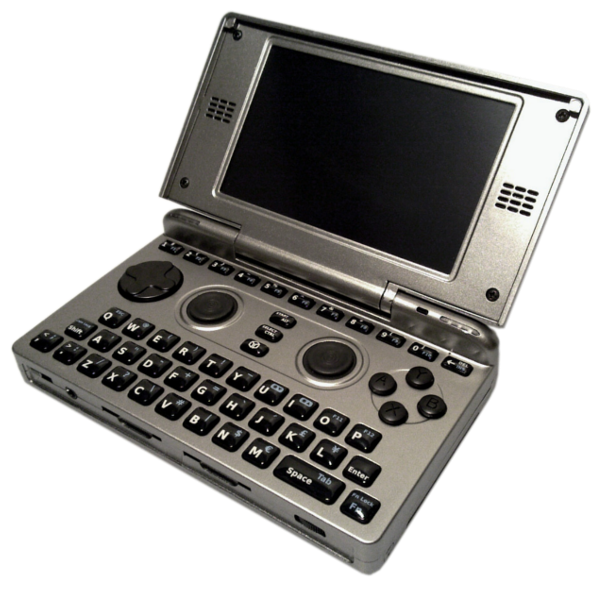
I had been looking up information on installing Linux on a Nintendo DS and I came across the Pandora. The reason for all this (and why I find the Pandora to be exactly what I had in mind) was that I was considering the merits of portable computer systems. My brother has a fully functioning command-line terminal on a CD (you pop it into a computer and it boots into it as a separate operating device) and I know there are Linux distros that you can fit on flash drives. While the idea of a portable computer is pretty appealing (given that, while technically portable, a laptop is somewhat clunky in certain environments), neither a flash drive nor a disc gives you the ability to use it outside of another computer. And, for both, you'd have to reboot the computer you want to use it on (which you can't be guaranteed the owner of whichever computer you're borrowing will be okay with).
Well, I knew people had succeeded in installing Linux on the DS so I thought I'd check that out. Even if it only gave me the command line, there's a lot you can do in a terminal (including, without images, browse the internet) and a DS is most definitely portable. Cool? Hell yeah.
Then I found the Pandora. See the front of that thing? That's a USB and two SD-card ports. Did I mention it gets wi-fi? And it has a keyboard (unlike the DS).
I usually don't like touch screens so I can do without but it has one too. And those D-pads? That's because one of its primary designs was also to be a video game emulator. Outside of what I was looking for but a fairly nice perk.
The RAM is only 512 MiB but it runs Linux so that probably won't be a problem (after all, I'm running about 34 tabs in Uzbl (my web browser) right now and I'm only using 2 GiB of RAM. And I would probably be running more efficient software on Pandora). Besides, the point wasn't to replace my laptop. It was to provide a cool little alternative if I ever couldn't (or simply didn't want to) use my laptop somewhere.
And it's the same size as a DS? Speaking of:
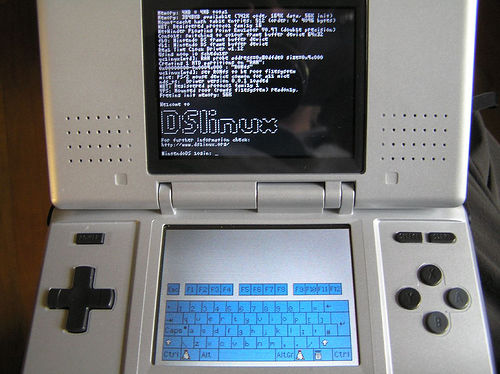
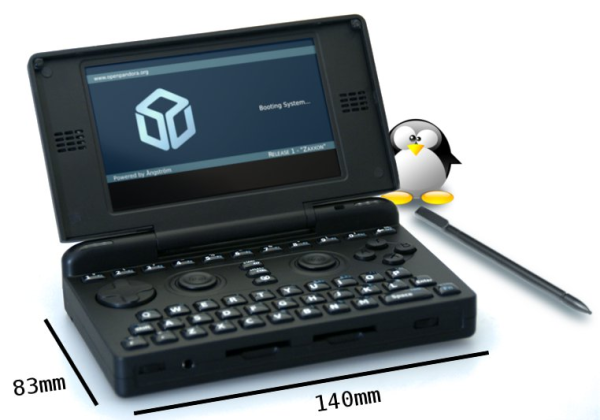
Not a bad improvement.
Anyway, I like to tantalize myself at times (and share said tantalization with others).
However, if mucking around with installing Linux on a DS does interest you (they're selling used $5 ones somewhere on the internet), here's an extensive link for you: http://osdl.sourceforge.net/main/documentation/misc/nintendo-DS/homebrew-guide/HomebrewForDS.html.

Archives
- August 2013 (15)
- July 2013 (12)
- June 2013 (19)
- May 2013 (20)
- April 2013 (22)
- March 2013 (28)
- February 2013 (21)
- January 2013 (19)
- December 2012 (21)
- November 2012 (26)
Recent Comments